Wednesday, March 4, 2009

UK workshops February/March 2009 - Camden, London


I'm typing this on the train from Leeds to London, having completed a mini-UK tour which took me from London to Liverpool, Cambridge, Shrewsbury and Altrincham. I was speaking to groups of music teachers, but also students (as young as 7) parents and even grandparents, as you will hear!

First up was a workshop in Camden, north London on 20th February. Hosted by Dot's Music (www.dotsonline.co.uk) this was an afternoon workshop and the relatively good turnout was partly because it was scheduled for the end of half-term. It was held in a lovely old church off Camden High Street (see picture above)

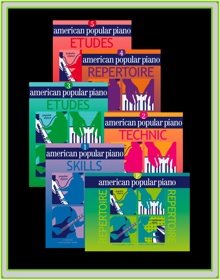
The teachers were very interested in American Popular Piano (www.americanpopularpiano.com) because Microjazz is now what you might call a "mature" product (I guess I am as well!) and this is the first major new series from Christopher Norton in years. The whole idea of a series using contemporary popular styles to teach students to read music, play well and enjoy listening to themselves struck a (ahem...) chord. But it was when I got teachers to come and improvise that interest really picked up. My "student" pictured above right was a teacher who said he was looking for something fresh for himself as well as for his students - teachers can get a bit jaded and a new angle can come as something of a relief!

One other participant said he was a sax player and teacher and was pleasantly surprised to find that my teaching methods were very similar to his - we'd both come to similar conclusions about what might be needed (and more importantly, what might work) independently.

Thanks to Dot, a french horn player -tuned-music dealer, whose enthusiasm for music and helping teachers seems undiminished.

Sunday, February 1, 2009

American Popular Piano (APP) Levels 6-8

The beginning of February marks the end of a major writing endeavour - the completion of Levels 6, 7 and 8 of APP, both Repertoire and Etudes books. Each Repertoire book contains 24 pieces, so there's a significant chunk of work for a start - 72 new pieces, many (for me!) quite extended and covering a gratifyingly wide range of styles. As with earlier volumes, 8 of the pieces in each book are ensembles, with a written-out teacher accompaniment and a backing track on CD.

The really radical part is in the Etudes books - I take 6 pieces from the Repertoire book of the same level and break down improvising on those pieces  into what I hope are manageable bits. You start with a chord progression for the left hand only, with a highlighting of certain chord types (an emphasis on inversions soon becomes apparent!) then some tips on right hand improvising, then the right hand melody and left hand chords are put together. then I take the same chords and put them in the right hand and add a bass line and hey presto! you have instant vamping (vamping tips also included) 

It's a very different approach to both improvising and chord analysis and I'm hoping students (and teachers..) will get into it quickly. The styles covered are a lot of fun - calypso, swing, hard rock, bossa nova, r'n'b etc...and will hopefully encourage fluency in lots of styles and lots of chord types and chord progressions.

I'm doing a whole lot of UK workshops shortly (see the tour list for dates, places and times) and will be covering some of this material in them. And of course I'll be doing the same at MTNA in Atlanta in March and at the Frankfurt Music Fair. See you there!

On the front page of the Novus Via website (www.americanpopularpiano.com) you can hear the backing track to Happy Times (from Level 6) and there's a link, also on the front page, to a pdf ofpart of the Improv Etude for the same piece. Check it out!

Friday, January 2, 2009

MicroRock


I've just completed, for Boosey & Hawkes,  MicroRock - 20 pieces in rock style for easy (5-finger easy) to intermediate piano. It was a fun book to write - I downloaded lots of classic rock tracks from itunes and then tried to find ways to make interesting piano parts that weren't too hard but were still very much part of the total band effect. There are terrific backing tracks on CD with the book and I advise their use - that way (particularly with headphones) you really do feel like you're stage-centre with a live rock band.
Above is the music to one of the pieces - The gig. It's in a late 60s rock style, reminiscent of Bad Company. The piece is all based on E pentatonic minor (in true rock guitar fashion) and almost in 5-finger position in both hands. Enjoy!

Thursday, December 11, 2008

Recording this week


I'm in the studio this week recording with UK-based gospel singer John Pantry, who is not just an excellent songwriter, but also a popular presenter of the morning programme for London's Premier Radio (www.Premier.org.uk
John came to me with a demo of the songs - I transcribed them all - this included getting John to play his piano parts into a music sequencing programme. I then exported those parts into Sibelius and edited them so that we ended up with parts playable by the average player. Once I had this edited piano score, I arranged the pieces for 4-part choir and sent them to an excellent local choir, Adoramus (www.adoramus.com) and they began rehearsing. At the same time, my team began to create tracks based on the piano scores and the choir were sent these as well.
We recorded the choir a few weeks ago, using 53 sets of headphones! It was a lot of fun and the choir loved the songs. The songs are largely based on the Anglican service and are destined both for choir use and for congregational use as well. 
Now that we're in the studio, we have added guitar parts, done remotely by an excellent session guitarist and sent to us on DVD. We have also had backing vocals done by a great singer in Seattle - Ingrid DuMosch - and saxes and flutes, again recorded remotely, done by a player in London. The end result is rich and full and we hope radio-friendly!
I own publishing rights in this project, as well as the recording. It has always been a significant part of my work to be involved on all these levels - transcription, arrangement, recording, publishing and licensing - and I have also found distributors for both the audio and sheet music.