Monday, May 21, 2012

Vila Real, Portugal May 2012


I’ve had a major fan in Portugal for probably 25 years – Victor Gomes, formerly education specialist at Roland Portugal:


He has always loved the Microjazz series and the midi files that accompanied the books and promoted both very effectively for many years. He now teaches at Conservatories in both Porto and Vila Real and was very keen to get me to visit them, initially the Conservatory in Vila Real. This is no easy task in the present economic climate. As Victor put it:


It has not been easy for them, as the economic situation in Portugal - especially with what concerns educational policy - has been very, very severe. Schools are striving hard to get doors open, because the government simply cut the funds to the conservatoires and music academies. 


After quite a bit of to-ing and fro-ing we got it together and I flew from London to Porto on a very late flight (air traffic controllers in Portugal decided to strike on the day I was travelling) So late that we arrived in Vila Real, by car from Porto, at 3.45 am!


By 9.30 the next day I was speaking to nearly 200 students. Most of them had never heard of Microjazz or me, so it was a chance to introduce them to the sound of Struttin’, Intercity Stomp etc. I got various students to come and play with me, which the audience loved. Here’s one of my Portuguese students, concentrating hard:


You can see it’s quite a large audience and also that the facilities were very good – a grand piano in a lovely concert hall, along with a Roland HPi-7 (which contains a Microjazz selection) 


I introduced students to the Microjazz series, to Microstyles, the Concert Collections and Preludes and the new Micro series. They saw video clips of students playing pieces and were happy to take part with clapping and vocal percussion and singing. And quite a few students played for me, not just on piano:


The Microjazz books for instruments with piano were described and in some cases illustrated with off-the-cuff performances, along with Concet Collection pieces for flute, clarinet etc.


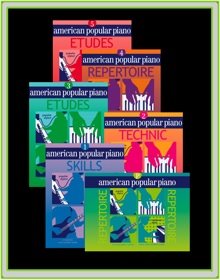
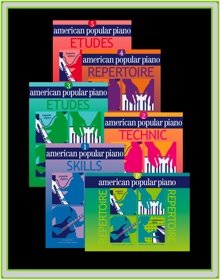
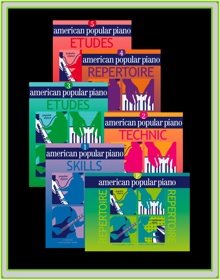
I finished by doing a quick overview of American popular piano, going straight to improvisation, using the Preparatory book. This was of great interest to both students and teachers and before the end of the day I had done some work with teachers on improvisation. Here’s a teacher having a go at simple improv:


Vila Real is a delightful town and we were able to sample some of the excellent local food (especially little savoury pies – a return visit is definitely in order!) and wine on this brief visit. 


Victor and the Conservatory are keen to put ona series of Christopher Norton Piano Festivals in northern Portugal, which would be wonderful. My thanks to the Conservatory for being prepared to have a foreign visitor in these straitened times. I hope to see you all again soon!

Thursday, May 10, 2012

Toronto, Canada, May 2012

My very first Piano Festival was in Canada, in Fort McMurray, but Toronto has become an annual fixture on my calendar and this was the 5th Christopher Norton Toronto Piano Festival, organised by the indefatigable Liselotte Jongedijk.
Day One was in Richmond Hill and was hosted by Miss Linda’s Music Studio and sponsored by Cosmo Music, a large music dealer with amazing facilities, including a first-rate concert hall.


I began with an improv group, using one of the rooms at Cosmo Music that accommodate lots of keyboards. The children enjoyed playing together and also seemed to enjoy the chance to come up with their own ideas (as long as they could repeat them!) Here are some of the students hard at work:


The day involved masterclasses as well as improv groups and both teachers and parents sat in on the sessions. The performers were well prepared and were also open to suggestions from me, especially if it made the piece easier to play! Here’s a master class student trying to concentrate while I demonstrate a point:


We moved to the concert hall later in the day and proceedings were rounded off by a Gala Concert, where students played for a very appreciative audience, with me busking along as required.


On Day 2 I went to The Toronto Montessori School, where a group of very well-prepared students took part in an afternoon masterclass. A number of the students also attended the main Piano Festival later the same day and were able to take part in another masterclass as well as an improv group. The piano teacher at the school, Lori Cotton, has used my material for many years and the performers were among the best I’ve heard in Canada. I hope to see them and their teacher again in 2013.
And so to the main event, the Toronto Piano Festival organized by Liselotte. Spread across 2 days and featuring over 50 students, this was a chance to work in some detail on improv with children as young as 7 and as old as 15. It was also a chance to make helpful adjustments to solo performances. We achieved some spectacular results and also had a lot of fun. Here are some pictures of students at work:


The Gala Concert was a wonderful end to the Festival – a large and very appreciative audience were treated to some breathtaking performances by solo performers as well as tight playing from the improv groups and some amazing improvisation from the older students. It really was a special occasion for everyone concerned. Roll on the next 5 years!


Monday, April 2, 2012

Frankfurt and New York, March 2012


Two of the biggest events in my calendar are the annual Music Fair in Frankfurt – Musikmesse – and the Music Teachers National Association (MTNA) conference in the USA – www.mtna.org. This year, these events overlapped, so I flew from Frankfurt to New York after 2 days at the Messe. 


In Frankfurt, I had my “own” stand as part of the huge Schott Music stand:


 The person on my right is Grace Chew, a distributor in Malaysia with whom I have worked a lot in the past. She is very keen to have me back in Malaysia in the not-too-distant future.


Apart from talking to music dealers and other industry people, I was asked to do 2 presentations on my German-language book Rock Pop Basics - Der Pop - Klavier - Workshop fur fortgeschrittene Anfanger.
 My demonstration was actually on the Schott stand and apart from people interested in hearing about it, I picked up quite a lot of passing traffic. One German dealer liked the sound and look of the book so much she asked me if I’d written anything else!
I was also asked to play for a reception at the end of the Thursday and was delighted to be joined by a Schott author, Ellen Mayer, who is a great percussionist. I played Level 6 of American Popular Piano with her, both the solo pieces and the duets with tracks and she picked up on the style and groove of each piece right away. The audience seemed to really enjoy the effect. Here is Ellen and yours truly after our performance:
 I was with my fellow-director of Novus Via, Clarke MacIntosh, for the 2 days of the Frankfurt fair and we had useful meetings with various people, including examination boards, technology companies and distributors.


On the Friday we both flew to New York, staying at a hotel on the Avenue of the Americas. After a set-up day, we had our usual very colourful stand displaying the entire APP series. Here’s Richard Holbrook, who’s been with us from the beginning, at the stand:
 The Novus Via presentation was at 8 am on the Sunday morning – not a great slot in the light of potential jet-lag! Scott McBride Smith, my co-presenter, was taken ill and I found out shortly before the presentation that I was flying solo. However, the presentation, emphasizing improvisation, went down well with the crowd and created quite a bit of activity at the stand. 


I met a number of people I know well while in New York – Marianne Fleming Bryan (a Words with Friends opponent!) Jovanni-Rey de Pedro, a fine pianist I met at the Australian conference, Peter Mack and Roxana Anklesaria-Doctor from the Indian event, Andrew Hisey, my Connections editor…the list goes on and on. And I met many teachers who are enthusiastically using American Popular Piano with their students. 


I played music on the stand much of the time and also gave sometimes quite in-depth one-to-one presentations on how to use the Improvisation Modules. Here I am with one of my “students”:

Traffic to the exhibition areas was slow this year – MTNA was in New York after all! And the market is imperceptibly changing, with digital platforms about to revolutionise sheet music in the way that e-readers have revolutionized the distribution of books. We had meetings with various people who are going down that route.


Christopher Norton Piano Festivals are gradually picking up pace. Apart from the Festivals in Toronto, Minneapolis and all points Australian already in place, I had fruitful discussions with teachers from Seattle and with Roxana in India about further Festivals before the end of January 2013. Do look at the details (from Australia) below if you’re interested in putting on a CN Piano Festival in your area. And check out www.TheChristopherNortonProject.com


Christopher Norton Piano Festivals 


Who is Christopher Norton? 
London based composer, arranger, educationalist and producer Christopher Norton is universally regarded as the leader in his field. 
World-famous for the Microjazz series, Christopher's other award-winning titles include the Concert Collections of original solo piano repertoire; the Essential Guides to pop styles; and the Piano Preludes. 
Christopher’s publications are represented on the AMEB, ANZCA, NZMEB and other examination syllabi widely used in Australia and New Zealand. 


What is a Christopher Norton Piano Festival? 
Over a 2 day period, Christopher Norton works with groups of students (Improvisation Workshops) and individuals (Master-classes).
At the end of the second day, there is a Gala Concert at which most of the students perform – either solo, duetting with the composer or in their improvisation groups. 


How many students are normally involved? 
Piano Festivals work best with between 48 and 100 students, over a two-day event, with students grouped for both the Improvisation Workshops and master-classes in appropriate Levels. The students can all be drawn from one music school or from a cluster of private studios or music schools. 


What instruments are needed? 
You will need access to a number of digital keyboards for the Improvisation Workshops. Ideally, there would also be a good-quality piano for the master-classes and for the Gala Concert. Grand pianos have been used for past Festivals, as well as better-quality digital pianos, or good-quality upright pianos. 


What sort of venue(s) work best? 
You will need: a venue large enough for up to 12 students, keyboards and stands, as well as room for teachers and interested observers. Local schools and churches, as well as music retailers, have been used successfully already. You may need a larger
venue for the Gala Concert, seating a minimum of 150 people. 


How is a Piano Festival structured? 
The Festivals are normally spread over 2 days. There are normally 5 or 6 sessions per day – morning and afternoon sessions, plus the Gala Concert on the evening of the second day. 
Students are put into level-appropriate groups. Each student takes part in one Improv Workshop session and one master-class session over the 2 days, and some perform at the Gala concert 


Example timetable of a 2-day Piano Festival: 
Day 1: 
9.00-10.00 10.15-11.15 11.30-12.30 
1.30-2.30 2.45-3.45 4.00-5.00 
Preparatory Level Improv sessions 8-12 students Preparatory Level Masterclasses
Level 1 Improv sessions 8-12 students 
Level 1 Masterclasses
Level 2 Improv sessions 8-12 students Level 2 Masterclasses 
If there are students at Levels 6 and above, their sessions could be at 6.00 and 7.00 (and even later if required) on Day 1. 
Day 2: 
9.00-10.00 10.15-11.15 11.30-12.30 
1.30-2.30 2.45-3.45 4.00-5.00 
5.00-6.00 6.30 -7.45 
Level 3 Improv sessions 8-12 students Level 3 Masterclasses
Level 4 Improv sessions 8-12 students 
Level 4 Masterclasses
Level 5 Improv sessions 8-12 students Level 5 Masterclasses 
Dinner and “Meet the Composer” event Gala concert 


What student preparation is needed? 
Once students are registered for a Piano Festival, their teachers are supplied, via Hal Leonard Australia, with appropriately leveled Repertoire Books and Etudes Books from Christopher Norton’s American Popular Piano series. 
Students are asked to prepare 2 pieces from the appropriate Repertoire Book and to work on the relevant Improv Etudes. 
Students will also prepare a solo piece by Christopher Norton to present in the Masterclass, if they choose to perform. The piece can come from any publication: graded examination repertoire, Microjazz, Connections and American Popular Piano etc. Naturally, original copies of the music must be used in the Master Class. 


What will the festival cost? 
The fee for a 2 day festival is $A2500. This fee is payable to the organiser. If your festival extends over 2 days, each subsequent day is $A1000. 
This fee covers: Chris’ daily fee and expenses, Chris’ flight and transfers, accommodation, admin cost, plus 2 books per student (valued at over $35). The organise will be responsible for all the bookings and payments of the expenses mentioned here. 
The organiser pays for Christopher’s international airfare. 


What other costs should I consider? 
A venue supplied with piano and keyboards for the Improvisation Groups and master- classes (and possibly a separate venue for the Gala Concert) 


What are my sources of revenue? 
• Student registration fees (you decide the fee)
• Auditing fees throughout the 2 days – observers of the sessions.
• Gala Concert ticket sales (you decide the ticket price)
• Sponsorship (eg local businesses, regional music teacher associations) 
If carefully planned, with the right number of students registered, revenue should comfortably exceed costs. You decide how much to charge. For example: 
$A60 registration fee for 72 students $A10 observers fee for 20 teachers/observers
$A Concert ticket fee for 50 concert attendee 
$A4770 – TOTAL POTENTIAL REVENUE 
$A50 registration fee for 36 students $A15 observers fee for 20 teachers/observers
$A10 Concert ticket fee for 50 concert attendee 
$A2600 – TOTAL POTENTIAL REVENUE 


Can you supply more detail about how each session works? 
Improvisation Groups
With groups of between 8 and 12 students, all at the same level, either at separate keyboards or sharing, Christopher Norton first does improvisation sessions. These are fast-paced and entertaining and start with simple rhythm games but lead quite quickly to extended and sophisticated improvisation from every student in the group. 
Master-classes
Each participating student will have prepared a solo piece by Christopher Norton, from any publication: graded examination repertoire, Microjazz, Connections and American Popular Piano etc.
Students receive a “mini-lesson” on their piece, in public, and are given useful and applicable tips on how to play the piece better and how to play the piano better. 
Gala Concert
Christopher Norton chooses students from each master-class and from the Improvisation Groups to play at a final Gala Concert, to which all students and parents are invited. 


Quotes from recent organisers of Christopher Norton Piano Festivals: 


The Christopher Norton Event was tremendous! Christopher taught the students in a calm, yet innovative way. The closing concert was sold out and was a wonderful opportunity for the many students who performed. I’ve rarely seen such happy and confident young performers! Taking into account the $250 donation that the FMTA had pledged to the event, the Norton weekend earned approx. $1070 for our general fund! Margaret MacDonald, Fredericton Music Teachers Association, Canada 


It turns out Christopher Norton is not just a talented and prolific composer, he is truly a master teacher! From our youngest five-year-old to our most advanced adult, Mr. Norton made everyone feel at ease while achieving incredible results in their playing. I
watched in awe as our students responded to telling observations about technique and musicality. One mother said the difference in her 
child's playing was like "removing a screen" after hearing years of "timid" playing from her daughter. The improv camp was wonderful and we hope Mr. Norton will come visit again! Leslie Gereghty,
Recreational Music Center, San Diego, USA 


How to Book? 
Christopher is currently already booked for events in Toronto between 27th April and 6th May 2012, in Minneapolis between 3rd and 13th June, in Australia between September 25th and October 25th. Please note there is significant interest in these events and will Festivals  are booked on a first in first served basis. If you know the dates you are interested in having Chris work with your students, please contact:


Liselotte Jongedijk (Canada) musica88@rogers.com 
Jon Michael Iverson (USA mid-west) jon@jonmichaeliverson.com
Olive Yau (Pacific North-west) abrsmwashington@gmail.com
Gina Wake (Australia and New Zealand) gwake@halleonard.com.au 


Please also note that the information above is merely a guide as to how a festival with Christopher may run. 
You can choose the structure that best suits your school or teaching studio or business. You decide how much to charge each participant, observer and concert attendee.

Friday, March 9, 2012

Paris 2012 Workshop

France is a notoriously difficult market for writers of educational music like myself – methods in English are a non-non, there is no nationwide piano teacher organisation and there are no piano examination boards. You are trying to promote supplementary material to a fragmented audience. 
Nonetheless, individual music dealers are occasionally prepared to promote events from time to time and I found myself, courtesy of Eurostar, in Paris on a cold, clear day, trying to interest Parisians in Microjazz. My French-speaking Schott representative, Sabine Vranckx, was there, along with store managers Laura Mahé-Barichard and Philippe Lacroix. Here are Philippe and Sabine:


The store was Woodbrass, right next to the Paris Conservatoire. It’s a large store, with all instruments represented as well as sheet music. A mailing was done to promote the event and I ended up with about 12 people (and various people passing by stopping to listen as well) who were given a complete product presentation on Microjazz and all things Boosey & Hawkes. Copies of the Guide to Microjazz were given away as a further inducement. You can see one in the hands of one of the participants:
What was interesting was that there were relatively few piano teachers present and indeed a number of audience members didn’t play the piano at all! I was relying on people liking the pieces (which I think they did) and I also got the audience to clap and even sing, which they seemed to enjoy. Video clips of children playing my pieces were also well received. I covered from Absolute Beginners through to the Preludes and was warmly applauded for my efforts!


I got three people to come and play with me (none of them piano players) and, as always, I found that they did quite well playing by ear. Here is one of my “helpers” playing a duet with me:
I do hope to do more in France and we are looking into something which involves a French equivalent of Pianist magazine and perhaps Roland France combining forces to try to reach piano teachers more directly. This was a good start and taught me that there are lots of ways of presenting my material, to pianists and non-pianists alike.